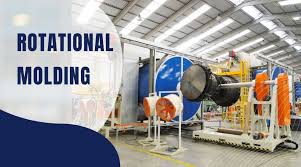

Rotational molding, often referred to as Rotomolding, is a versatile and cost-effective manufacturing process widely used to produce hollow plastic products. Known for its ability to create complex shapes with uniform wall thickness, rotomolding has become an essential technique in industries ranging from automotive and agriculture to consumer goods and industrial equipment.
At its core, rotomolding involves heating powdered plastic resin inside a hollow mold, which is rotated simultaneously around two perpendicular axes. This dual-axis rotation ensures that the molten plastic evenly coats the interior surface of the mold, gradually building up the desired thickness as it cools and solidifies. The result is a seamless, stress-free product without weld lines or weak spots, making it ideal for durable and watertight containers, tanks, and enclosures.
One of the key advantages of rotational molding lies in its design flexibility. Unlike other molding methods, rotomolding can produce large and intricate parts without the need for expensive tooling or complex molds. This makes it particularly suitable for low to medium production volumes, prototypes, and custom designs where cost efficiency is critical.
Materials used in rotomolding are typically thermoplastics such as polyethylene, polypropylene, and PVC, each offering specific properties tailored to different applications. Polyethylene, for example, is widely favored for its toughness, chemical resistance, and affordability. The choice of material directly influences the final product’s durability, UV resistance, and overall performance.
From an operational standpoint, the rotomolding process includes several stages: loading the powdered resin into the mold, heating and rotating the mold in an oven, cooling the mold to solidify the plastic, and finally, removing the finished part. This process allows for minimal material waste, as excess powder can often be recycled for subsequent runs, contributing to sustainable manufacturing practices.
Despite its many benefits, rotomolding does have limitations, such as longer cycle times compared to injection molding and limited suitability for very thin-walled products. However, its advantages in producing large, hollow, and complex parts at a reasonable cost make it a preferred choice for numerous applications.
In summary, rotational molding offers a unique combination of flexibility, durability, and cost-efficiency. Understanding the basics of this process is essential for engineers, designers, and manufacturers looking to leverage its strengths in creating high-quality plastic products.